A Family Guide to Choosing Support at Home in 2026
If you've started looking into home care for your mum or dad, you've probably already found that the hardest part isn't the caring. It's working out where to begin.
Support at Home replaced Home Care Packages on 1 November 2025. There are eight funding levels, quarterly budgets and new service categories — and while that means more choice and more control than the old system, it also means more to get your head around.
This guide walks through how the program works, how to understand what your parent actually needs, and what to ask before you commit to anyone. You don't have to work it out alone.

Key takeaways
Eight funding levels. Your parent's level comes from an aged care assessment, and clinical care is fully covered by the government.
Needs first, provider second. Understanding what your parent needs — physically, cognitively, emotionally and around the house — makes every other decision easier.
Communication beats size. How a provider talks to you tells you more about the care you'll get than how big they are or what they charge.
The house tells you things people don't. Changes in household condition are often the earliest sign that someone needs more support.
Good questions do the work. A short list of direct questions will separate providers faster than any brochure.
How Support at Home works
Support at Home is the Australian Government's in-home aged care program. It launched on 1 November 2025 and brought every level of home-based aged care under one structure.
There are eight classification levels, from Level 1 for occasional, low-level needs through to Level 8 for complex, intensive care. Your parent's level is set through an aged care assessment arranged via My Aged Care.
Funding arrives as quarterly budgets rather than one annual sum. Ten per cent of each quarter's budget is set aside for care management. Unspent funds carry over to the next quarter, capped at $1,000 or 10% of the budget, whichever is greater — so there's some flexibility, but it's not unlimited. We've written more on making the most of unspent funds.
Services sit in three categories:
Clinical care — nursing and allied health. Fully government-funded.
Independence — personal care such as showering and dressing. From 1 October 2026 this moves into clinical care and becomes fully funded too, with no contribution.
Everyday living — domestic assistance, gardening, transport. A higher co-contribution applies.
That October change is worth knowing about now. If your parent has been holding back on personal care because of the cost, their budget is about to stretch further.
Start with what your parent needs
Most families start by comparing providers. It's more useful to start with a clear picture of what's actually needed — otherwise you're comparing organisations without knowing what you're comparing them on.
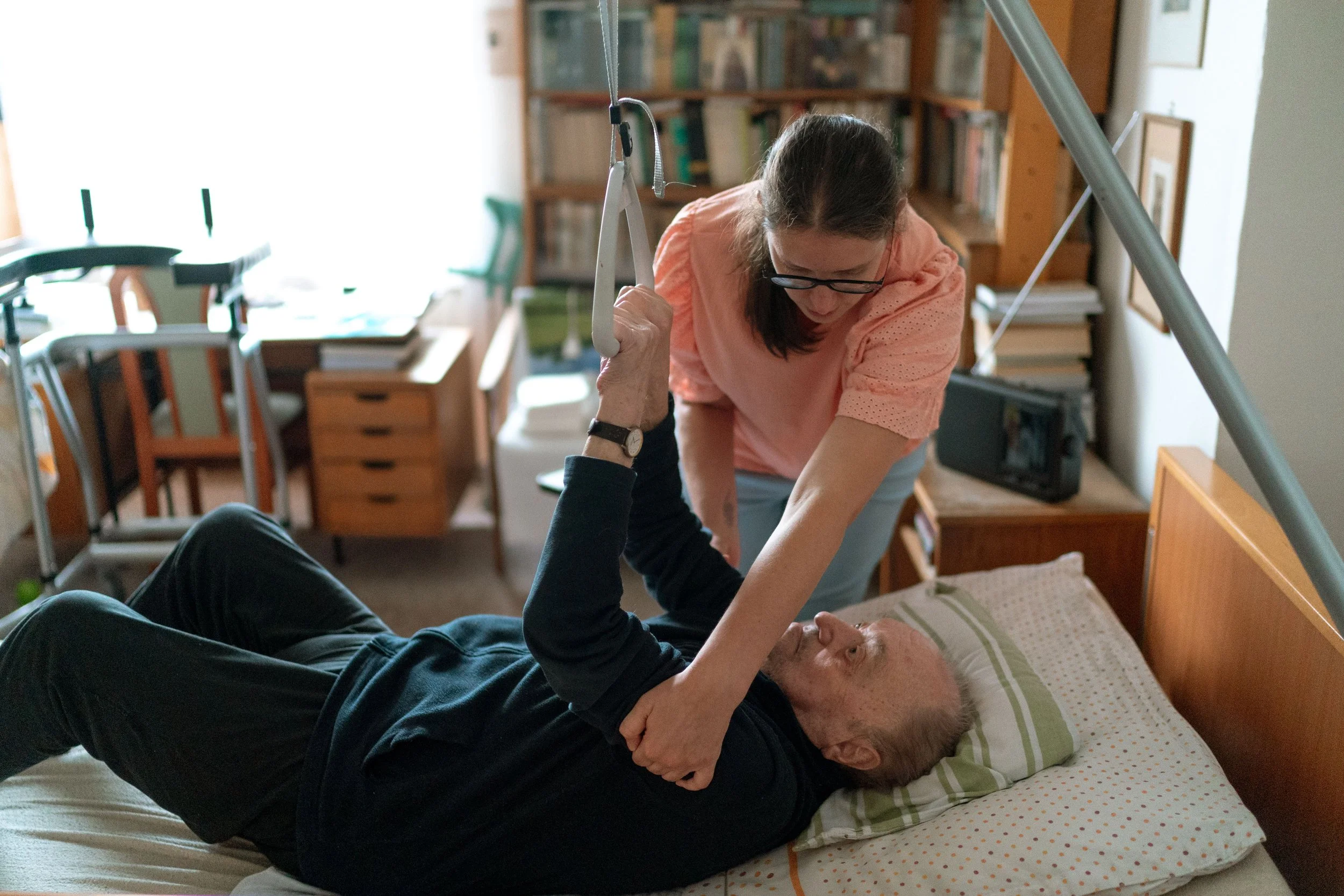
Physical and mobility. Has getting around become harder? Are showering, dressing and moving through the house still manageable and safe? New grab rails, a reluctance to go outside, or unexplained bruises are all worth paying attention to.
Cognitive and emotional. Missed appointments, unopened mail, confusion about medications or repeated conversations can point to memory changes. So can a drop in mood or withdrawing from things they used to enjoy.
Household condition. A home often says something before anyone does. Post piling up, a garden getting away from them, laundry stacking, food past its date in the fridge — these are usually signs that the support in place isn't quite enough yet. Our teams are in people's homes regularly, which means we're often the first to notice a change and say something about it. That noticing-and-communicating loop is the real difference between a task-based service and someone genuinely keeping an eye on things.
Social connection. If your parent has stopped going to their group, seeing friends, or leaving the house, social and community support is worth building into the plan rather than treating as an extra. Regular connection supports memory, mood and physical health together.
What a good provider looks like
They answer the phone. Poor communication is the most common reason families move providers. When you ring, does a person pick up? When you raise something, does anyone act on it? That's the whole relationship in miniature.
The same faces turn up. Consistent workers build trust, learn routines, and notice when something has changed. A rotating roster of strangers can't do that, however well-intentioned everyone is.
They know the area. A team that lives and works in the same community tends to be more reliable and more personal. Sistability's local Northern Rivers team is built this way — people are known by name, not by reference number.
Support can grow. Needs change. Whether that means more help around the house, help keeping the garden safe and accessible, or coordination as things get more complex, the support should be able to shift without you starting over.
Safety is active, not just compliant. Every provider has to meet the Aged Care Quality Standards — that's the floor, not the ceiling. Ask how workers are screened, trained and insured. Then ask what happens when someone spots a trip hazard or a faulty heater. Noticing and reporting it is the part that matters.
Pricing is out in the open. Providers must publish their standard prices on their own website and in the My Aged Care Find a Provider tool. Government price caps came into effect on 1 July 2026. If pricing is hard to find or hard to follow, that tells you something.

Questions worth asking
On communication
How do you keep families updated about how Mum or Dad is going?
What happens if your team notices a change in the home or in their health?
Can I speak to the same person each time, rather than a call centre?
How do you handle it when something goes wrong?
On staff and service
Will the same support workers visit regularly?
Are workers background-checked, trained and insured?
How soon can support start once funding is approved?
What happens if a scheduled visit can't go ahead?
On funding and fees
How is the quarterly budget managed, and how will I see where it's gone?
What's included in the 10% care management allocation?
Where are your prices published?
What notice period applies if we decide to transfer somewhere else?
Getting through the My Aged Care process
Step 1 — Register. Call 1800 200 422 or visit myagedcare.gov.au. You can't access funding without it, and you can register on your parent's behalf with their consent.
Step 2 — The assessment. An independent assessor evaluates needs at home or by telehealth, and sets the classification level. Encourage your parent to describe their harder days honestly, not just their better ones — it's the most common reason people end up on a level that doesn't fit. Here's what to expect from the assessment.
Step 3 — The means assessment. Services Australia (1800 227 475) works out the co-contribution for Independence and Everyday Living services. Full Age Pensioners with limited assets generally pay little or nothing. Clinical care stays free regardless.
Step 4 — Choose and begin. Use Find a Provider on My Aged Care, and ask around locally — GPs, community nurses and other families are often the best source. Once a care plan is agreed, services start and the quarterly budget activates.
If you're in the Northern Rivers and you're stuck before any of this is settled, our Care Compass service exists for exactly that — helping families understand their options before funding is confirmed.
If you're unhappy with a provider
You can change providers, and it's more straightforward than most families expect. There's no new assessment, and the classification level stays the same. Contact the provider you'd like to move to, agree a transition timeline, and let your current provider know in writing — checking what notice period applies.
The usual reason families stay put is uncertainty about the process rather than satisfaction with the service. Once the first call is made, most transfers move quickly.
A checklist to keep you organised
Aged care assessment completed through My Aged Care
Means assessment completed with Services Australia
Key needs identified — physical, cognitive, emotional, household
Two or three local options shortlisted
Asked how families are kept informed
Confirmed worker screening, insurance and consistency
Compared published prices
Checked that support can grow as needs change
Asked what happens when the team notices something
Spoken to other local families
Where to go from here
There's no prize for rushing this. Take the time to understand what your parent needs, ask direct questions, and pay attention to how people talk to you — because that's what you'll be living with.
Support at Home gives families more control and more visibility than the old system did. Use it. Compare published prices, ask about consistency, and trust your instincts about the people who'll be walking through your parent's front door.
If you're in the Northern Rivers and you'd like a hand making sense of it, we're here. We're a certified social enterprise; we're local, and we reinvest at least half our profits back into local employment and community. Mostly though, we're a team who notice the things others miss — and say something when it matters.
You don't have to manage this alone. Get in touch for a no-pressure chat.
Common questions
-
Support at Home is the Australian Government's in-home aged care program, launched 1 November 2025. It replaced Home Care Packages with eight classification levels, quarterly budgets and fully government-funded clinical care.
-
The level is set through an aged care assessment arranged via My Aged Care (1800 200 422). An independent assessor looks at daily living needs, health conditions and support requirements, and assigns a level from 1 to 8.
-
Yes, at any time, without a new assessment. Your funding and classification level stay the same. Check what notice period applies with your current provider.
-
Clinical services — nursing and allied health — are fully government-funded. Independence services (personal care) attract a means-tested co-contribution, though personal care moves into clinical care and becomes fully funded from 1 October 2026. Everyday living services such as domestic assistance, gardening and transport carry a higher co-contribution.
-
Unspent funds carry over into the next quarter, up to $1,000 or 10% of the quarterly budget, whichever is greater.
-
Care Compass helps families understand the aged care system before funding is confirmed. Once support is in place, we coordinate services, keep families informed, and speak up when we notice something changing.
-
Often, yes — for consistency and personal attention rather than geography alone. With Sistability you get a local Northern Rivers team who live and work in the same communities as their clients, answer the phone, and notice changes in the home early.